
The AI Lens: Seeing Your Business Processes Differently
The AI opportunity isn't hidden in the technology. It's hidden in how you look at your own processes. Developing that lens is trainable, and it changes everything.

Tim Clark
Co-founder · 28 March 2026 · 4 min read


TL;DR
Two people can look at the same workflow and one sees necessary steps while the other sees three places where AI could halve the manual work. The difference isn't intelligence. It's a trainable lens. Once people develop it, they can't unsee the opportunities, and the best applications come from the people closest to the work.
Large organisations are pretty good at understanding their own processes. They’ve got documentation, workflow diagrams, systems mapped out in detail. Years of institutional knowledge about how things move through the business, who hands off to whom, where the approvals happen, what the exceptions look like.
What they often can’t see is where AI fits into any of it. A Harvard Business School study found that consultants using AI were 40% more productive, but only when they understood which tasks AI could actually help with. The capability gap isn’t technical. It’s perceptual.
This isn’t a criticism. It’s just a different skill. You can know a process inside out, understand every step and exception and edge case, and still not recognise the parts where AI could help. Because you’re looking at it through the lens of how it’s always worked. You’re seeing the process as it is, not the process as it could be.
The AI opportunity is sort of beside the thing you’re looking at. Adjacent. Easy to miss if you don’t know the shape of it.
Two people can look at the same workflow and one sees necessary steps while the other sees three places where AI could halve the manual work. The difference isn’t intelligence. It’s a trainable lens.
A lens, not a skill
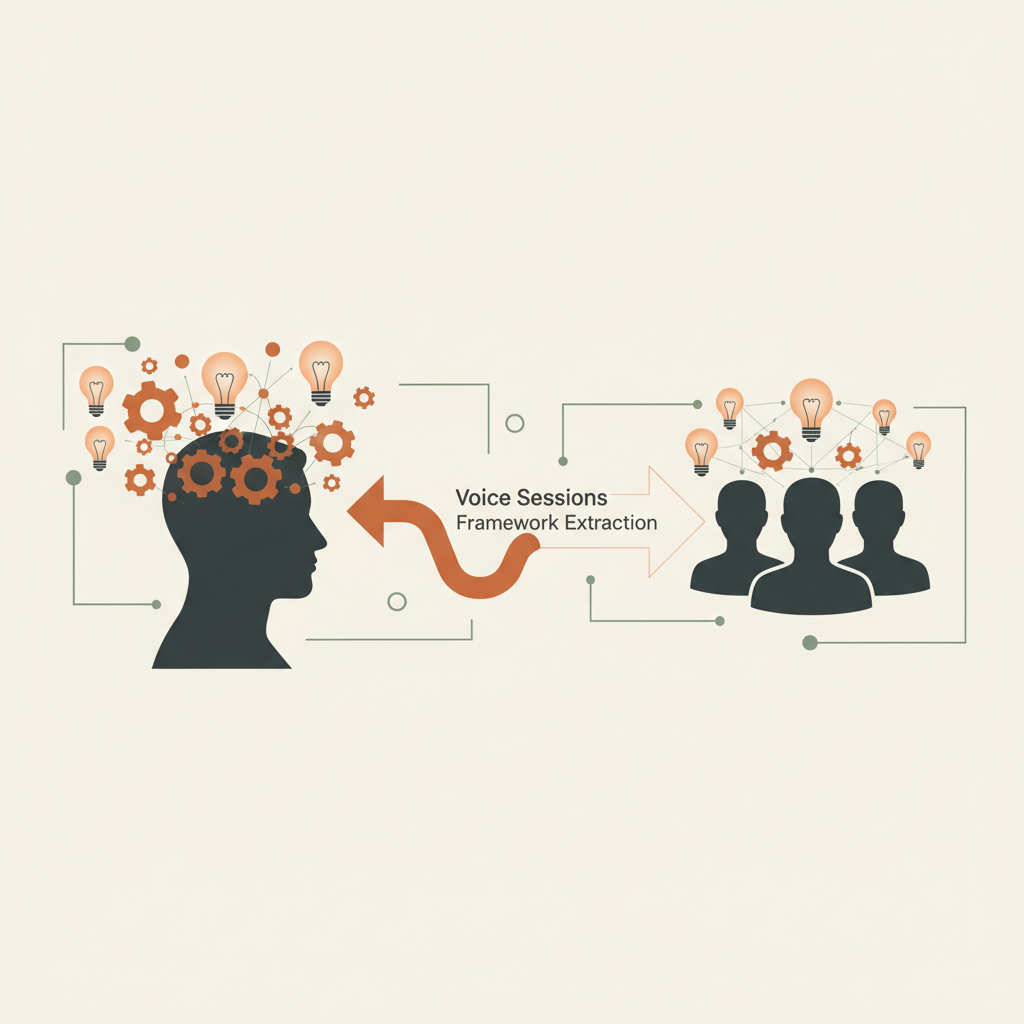
I’ve started thinking of it as a lens problem. Same information, different way of seeing it. Two people can look at the same workflow and one sees a series of necessary steps while the other sees three places where AI could take out half the manual work. The difference isn’t intelligence or experience. It’s just that one person has learned to look for certain patterns and the other hasn’t.
Once someone develops that lens, they start spotting things everywhere. Tasks that are repetitive in a particular way. Decisions that follow patterns even when they feel like judgment calls. Places where information gets stuck or has to be manually translated between systems. Processes where someone is basically acting as a bridge between two databases, copying and reformatting and checking.
Before you have that lens, though? It’s all invisible. The opportunity is sitting right there in the workflow diagram and nobody sees it because nobody knows what they’re looking for.
Context meets capability
The interesting thing is that this isn’t really about technical knowledge. The people who get good at spotting AI opportunities aren’t necessarily the most technical people in the room. They’re often the ones who understand the work deeply, who’ve done the job or managed the team or dealt with the complaints when things go wrong, and who’ve learned just enough about what AI can do to make the connection.
That combination is powerful. Deep context about how work actually happens, plus enough AI literacy to see the possibilities. You don’t need to know how to build the solution. You just need to know enough to recognise that a solution might exist.
That’s a trainable thing. It’s not magic. It’s not some innate talent that only certain people have. It’s a lens you add. Takes a bit of time, a bit of exposure, some examples of what AI can actually do in practice rather than in theory. Once it’s there, you can’t unsee it. You look at a process and the opportunities just pop out.

Better questions, not answers
We’ve had people come out of sessions and immediately start listing things they want to try. Not because we told them what to do, not because we handed them a roadmap. Because they could suddenly see it themselves. They’d look at something they’d been doing for years and go “wait, why are we doing it this way?”
That question is the beginning of everything. Not “how do we use AI?” but “why does this process work the way it does, and does it have to?”
The AI lens doesn’t give you answers. It gives you better questions. And usually the people closest to the work, once they can see it differently, come up with applications that nobody from the outside would have thought of. They know the weird edge cases. They know what actually takes time. They know where the friction is.
All they needed was a different way of looking at it.
The AI lens doesn’t give you answers. It gives you better questions. And the people closest to the work come up with applications nobody from the outside would have thought of.
Ready to develop that lens for your team? Our AI Clarity Session helps your people see the opportunities hiding in their own workflows. Or explore our real-world AI use cases to see what others have spotted once they learned to look.