
AI Is the Easy Part
Many businesses are struggling to 'get' AI, and that struggle is the clue. A field note from Fiji on why your people, not your tools, decide who wins with AI.

Tim Clark
Co-founder · 24 May 2026 · 10 min read
TL;DR
AI gives you quick wins almost immediately, but real change takes people and time, and fast doesn't mean correct. The businesses that win won't have the cleverest tools. They'll be the ones who got the best out of the people they already have. Readiness was never about the technology. It's about whether you've done the thinking.

Our group’s conference photo. We were each set the task of making one, and, fittingly for the week, plenty of us turned to AI to pull it off.
I’ve spent the last few days at the Nurture Change retreat in Fiji, and the same question keeps finding me. It arrives dressed differently each time, from people running very different businesses, but underneath it is the same one.
“Where do I even start with AI?” “Am I already behind?” “Is this really for a business like mine?” And just as often, said a little more quietly: “I don’t think I actually get it.”
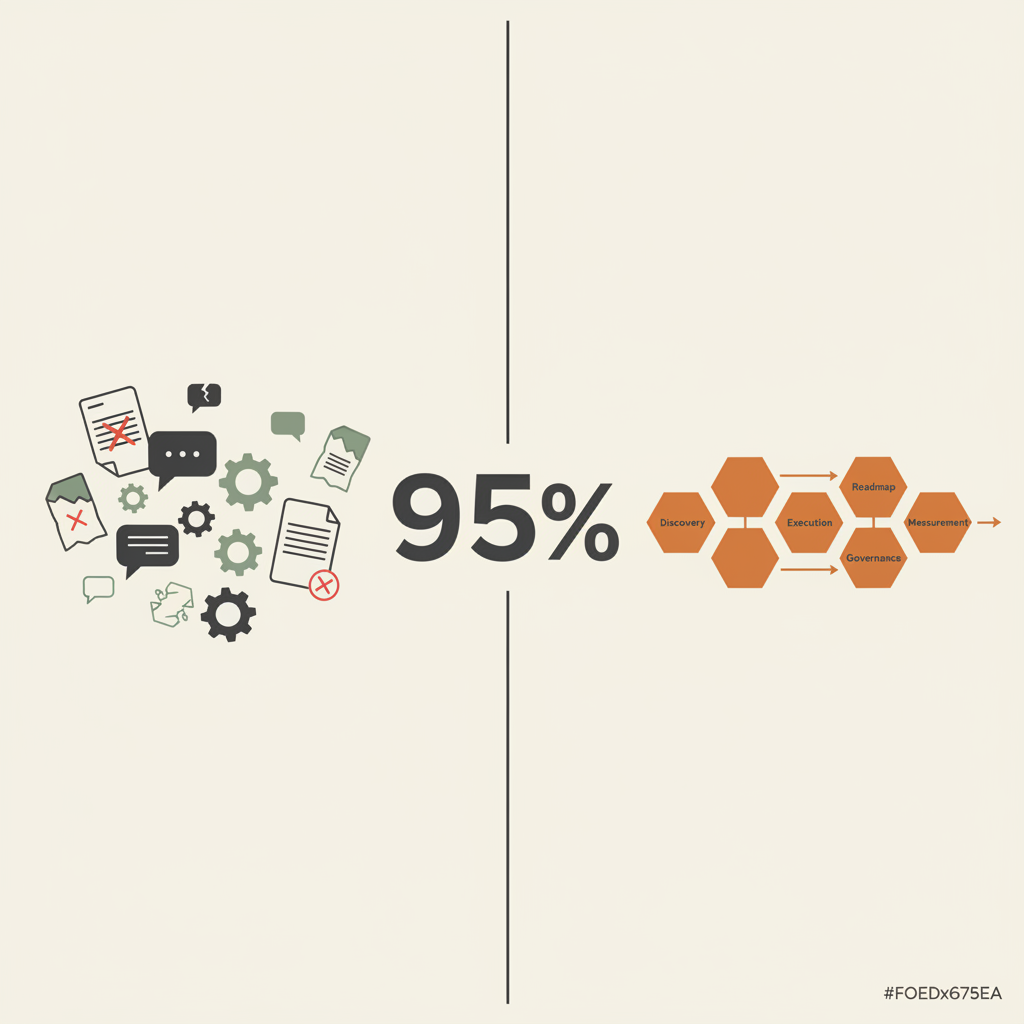
If that is you, let me say something plainly. You are not behind, and you are not slow. AI is genuinely hard to get your head around, and anyone pretending it is obvious is either selling something or hasn’t really tried to use it. The struggle is normal. You’re in good company, too: almost nine in ten New Zealand businesses will tell you they’ve adopted AI, yet walk into most of them and you’d struggle to see what actually changed. Lots of motion. Not much movement.
It felt like the business had adopted AI. Really, one person had.
Here’s the version of that I keep hearing this week. Someone tells me ChatGPT has changed how they work. It is saving them hours, they swear by it, and they are not exaggerating. Then I ask a simple question: could the rest of your team get that same gain tomorrow? And it goes quiet.
Because the gain lives inside one person’s personal login. It cannot be handed over, it cannot be repeated, and if that person leaves, it leaves with them. That was never a strategy. It was a happy accident.
The struggle is the clue
So the struggle isn’t the problem. The struggle is the clue. Because once you sit with it for a while, this is what becomes clear: the technology is remarkable, and it is also the easy part. You can have a capable AI tool running in your business this afternoon. What you cannot buy this afternoon is the judgement to know what to point it at, the clean data to feed it, and the people who will actually fold it into how the work gets done.
That is the hard part. That is the human part. And humans being central isn’t a flaw in AI to be engineered away. It is the whole point.
Zion Armstrong, former President of Adidas North America, spoke at the retreat about exactly this. Running a company of twelve and a half thousand people, he set up an innovation challenge across the whole business, and found the best ideas rarely came from the senior leaders. They came from the people you’d least expect: someone in a distribution centre, an intern who bounced into his office with an idea. His message was simple.
Innovation comes from your team.
He wasn’t talking about AI. But it lands just as hard here. The tools don’t have the ideas. They don’t know your customers, your trade, the particular thing you do that nobody else quite does. Your people hold all of that. AI can amplify it, but it can’t originate it. So the businesses that get somewhere with this won’t be the ones with the cleverest tools. They’ll be the ones who got the best out of the people they already have.
Before I go further, let me be honest about where I’m standing. I haven’t got this all worked out, and I’d be a little wary of anyone who tells you they have. This is moving quickly, and we’re all still learning, us included. One or two of these lessons we learned the hard way ourselves. But if I can save you some of the time most businesses lose getting there, this was worth your while.

Quick wins are real. Don’t mistake them for change.
AI will give you a win almost immediately. You will draft something in a fraction of the time, summarise a document that used to take an hour, get an answer that would have meant three phone calls. It feels like progress. It is progress, of a kind.
But a quick win is not the same as change. Change is when the way your team works is genuinely different, and stays different, six months later. That involves people and processes, and neither of those moves overnight. You can switch on a tool in an afternoon, but you cannot switch on new behaviour in an afternoon.

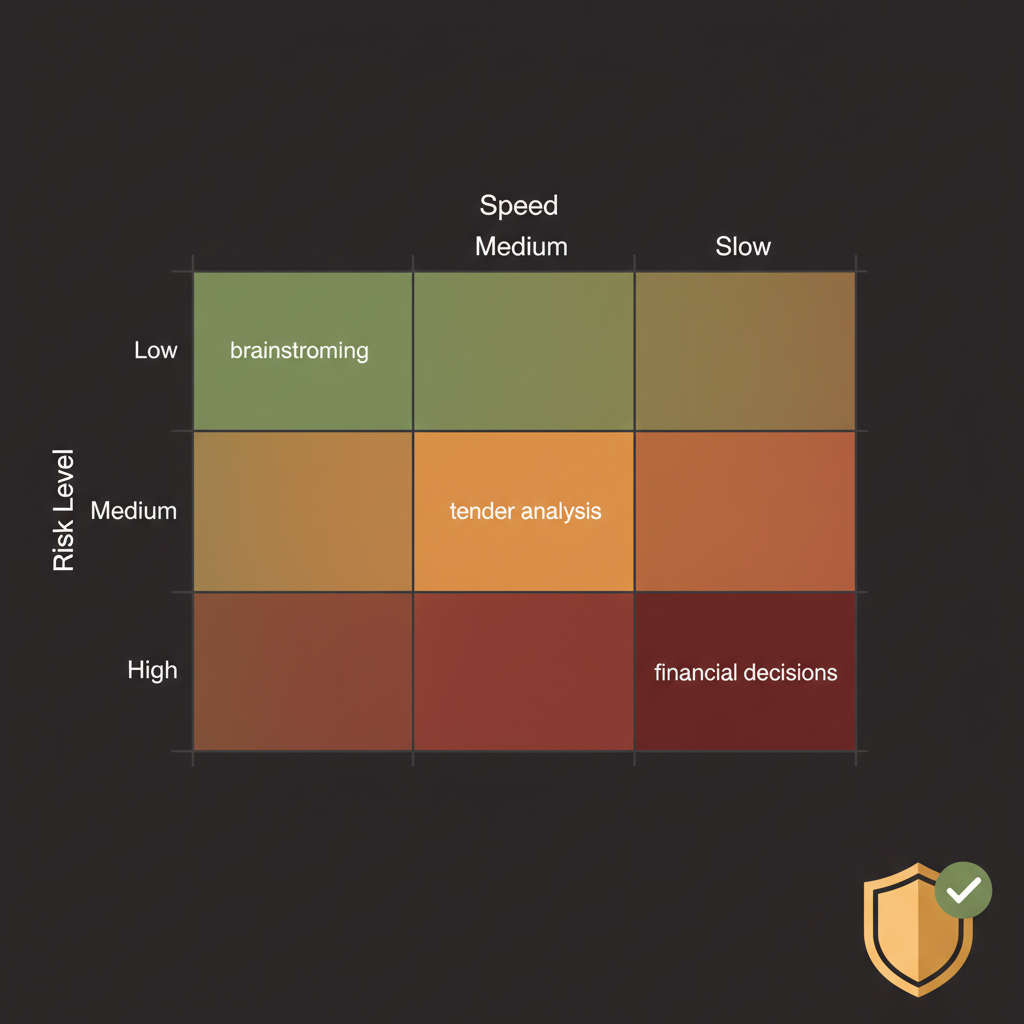
Just because AI gave you an answer quickly doesn’t mean the answer is right. Fast and wrong is worse than slow and right, because fast and wrong scales.
Start with the problem, not the tool
Most AI projects start the wrong way round. Someone reads an article, or hears a competitor is “doing AI”, and the decision becomes: we should do AI. Then the scramble starts to find something for it to do.
Turn it around. Can you say, in one sentence, what you want AI to do for your business this year? If it takes a paragraph, you don’t have a strategy, you have a wish list. And pick a problem whose cost you actually understand. When you know the cost of the problem, you can tell whether the solution is worth it. Without that, you’re guessing, and you’ll keep guessing when someone asks what the return was.
AI only sees what you can show it
This one is unglamorous and it matters more than almost anything else. AI is only as good as the data you put in front of it.
Picture your customer records. To you, John Smith, JS, and J. Smith are obviously the same person. To AI, they might be three different people, and it has no way of knowing which. So it guesses. Sometimes it guesses right. Sometimes it doesn’t, and you don’t find out until the guess is sitting in front of a customer.

Most of what people call an “AI problem” is really a data problem wearing a disguise. Before you ask AI to do clever things with your information, ask a plainer question: could you put your hands on the data that tells you who your best customers are, and why, in under ten minutes? If not, that is where the real work starts.
It’s the people, not the technology
You could hand your team the best AI tools in the world and still fail. Most organisations do. The reason is almost never the technology. It is that the people part got skipped. Think about your team in three groups.

- Enthusiasts. They’ll try anything. Start here. Let them find the wins.
- Pragmatists. They’ll come on board the moment you show them it saves them time. Let them follow the evidence.
- Resistors. They don’t trust it, or fear it’ll replace them, or simply don’t have a spare minute to learn something new. Don’t spend your energy converting them first. They come last, and some of them only come round when they watch a colleague’s work get easier.
A lot of people have been burned before. A new system that promised to make life easier and delivered frustration instead. Something done to them, not with them. So the resistance you’re seeing often isn’t about AI at all. It is the memory of the last time. That is who you’re really bringing along, and they need to be brought along, not steamrolled.
Give people permission, and a bit of time, to experiment without it being a formal project. And pay attention to who your champions turn out to be. They’re often not who you’d expect: the system thinkers, the ones who quietly understand how the whole thing fits together. Find them, back them, let them carry it.
Keep a human in it
It is tempting, once something works, to take your hands off the wheel and let it run. Be careful here. The point of AI is not to remove people from the process, it is to change what those people spend their time on. The judgement, the exceptions, the “that doesn’t look right”, that is the human’s job, and it gets more important as the machine gets faster, not less.

Ask yourself what you’d happily automate tomorrow. Then ask the harder version: what would break if it got something wrong and nobody was watching? If the honest answer is “quite a lot”, that’s not a reason to avoid AI. It’s a reason to keep someone in the loop while trust is being earned.
The knowledge already in your building
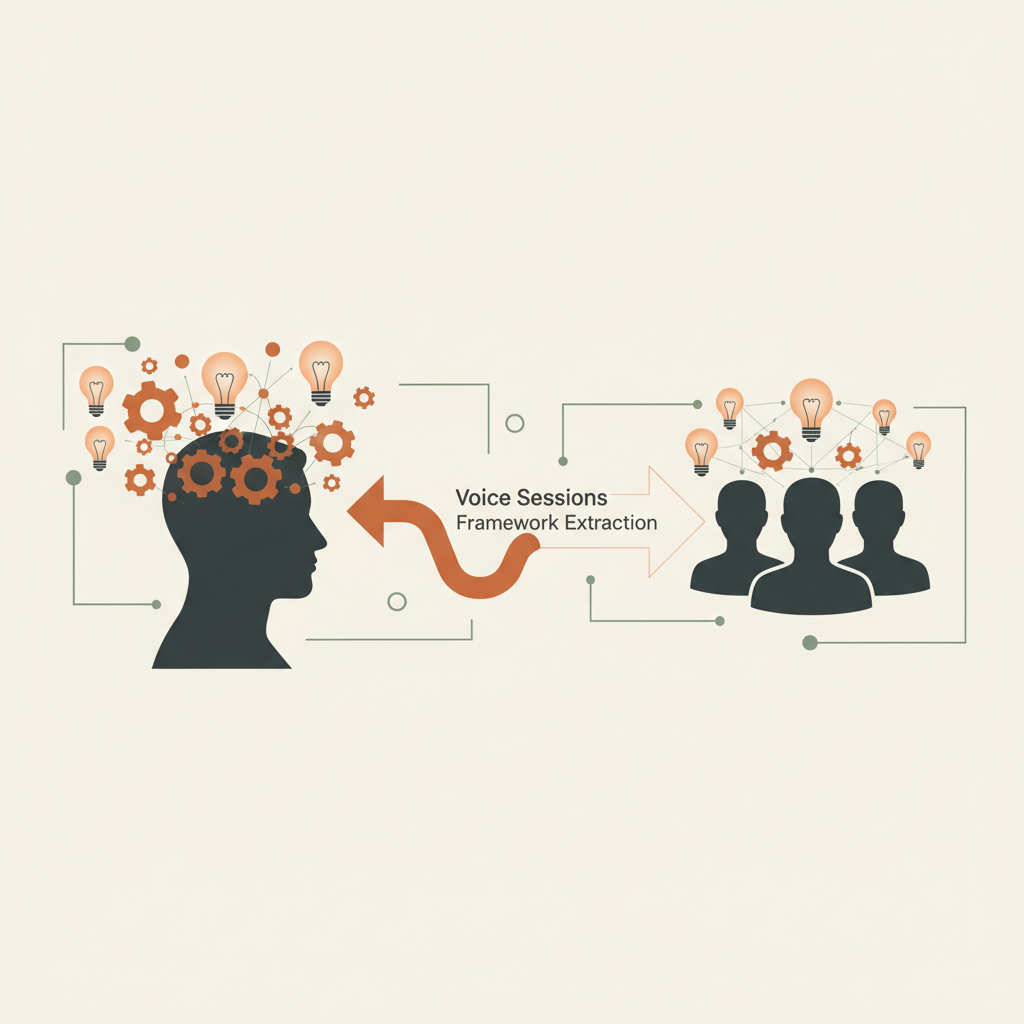
Your most experienced person carries years of judgement in their head. The rules, the exceptions, the “we tried that in 2015 and here’s why it didn’t work”. When they retire or move on, most of that simply leaves with them, and everyone panics about who’ll do the job.
AI changes what’s possible here, and not in the way people assume. Used well, it isn’t just a thing that does tasks for you. It is a way to capture and keep the knowledge your business actually runs on, before it walks out the door. That’s a quieter use than the flashy demos. For a lot of businesses, it’s the more valuable one.
Guardrails you’ll actually use
You don’t need a forty page AI policy. Almost nobody reads those. What you need is simpler and more honest. If a member of your team pasted a client’s confidential information into a public AI tool this afternoon, would anyone know? Would they even know whether they were allowed to?
Good governance here is closer to basic hygiene than to bureaucracy. A handful of clear lines that everyone has actually read beats a thick document that sits in a drawer. Write the five lines. Make sure people know them. That’s most of the job done.
Where this leaves you
If you’ve read this far and felt a little uncomfortable in places, good. That discomfort is the useful part. It means you’ve spotted a gap, and a gap you can see is a gap you can close.
Readiness for AI was never really about the technology. It’s about whether you’ve done the thinking. Whether you know the problem you’re solving and what it costs. Whether your data can be trusted. Whether your people are with you, or quietly bracing for the next thing being done to them. Whether you’ve kept a human where the judgement lives, and held onto the knowledge that makes you, you.
I won’t pretend it’s simple, or that we always get it right, because we don’t. We’re working it out as we go, same as you. But the machine was always going to be the easy part. The thinking is the work, and the thinking is yours to do.

Great to meet everyone at Nurture Change this week. If there’s anything AI you’d like to talk through, big or small, give us a call. We’d genuinely love to help.